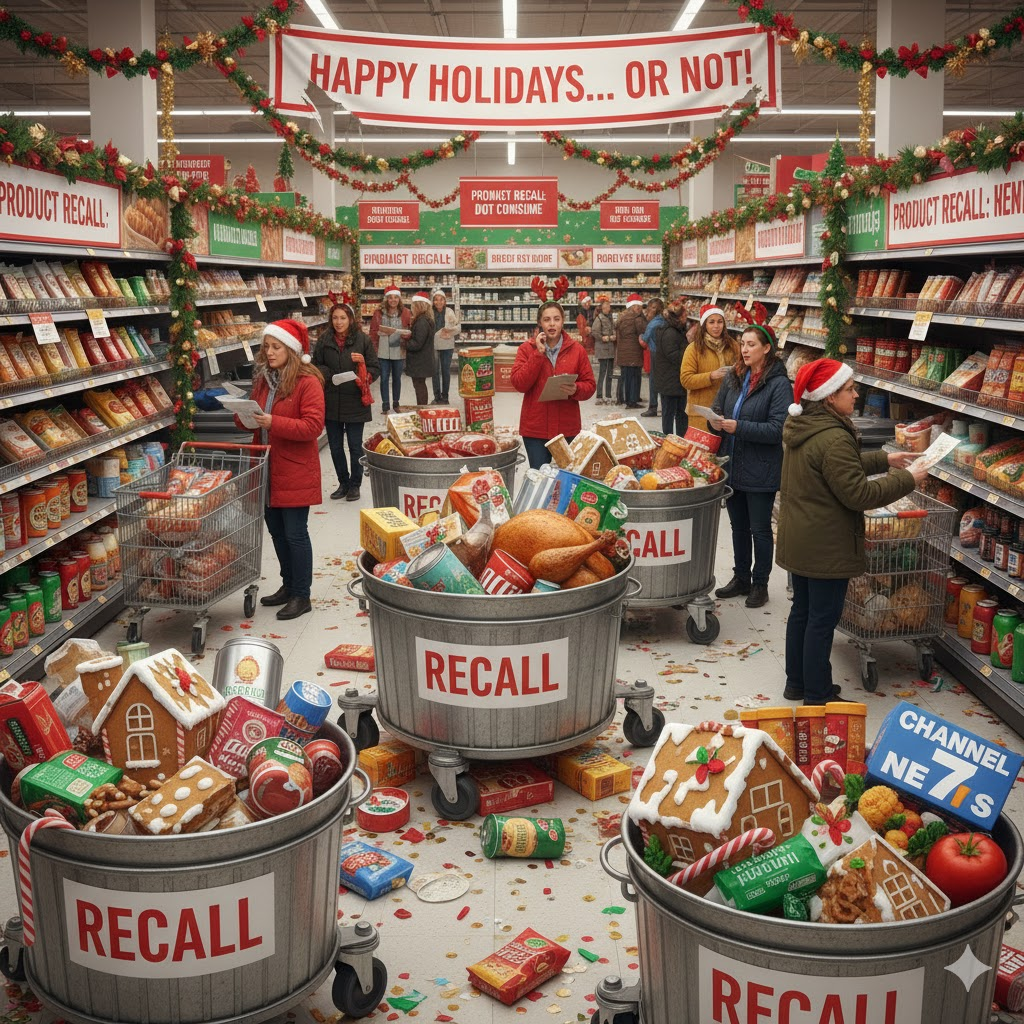
Supermarket festive food recalls are becoming increasingly common, especially during the holiday season when demand for seasonal products spikes. These recalls typically involve items such as cheeses, nuts, ready-to-eat meals, sandwiches, and festive treats that may pose health risks. Recent incidents across Tesco, Aldi, and Sainsbury’s highlight the importance of paying attention to these urgent warnings and taking immediate action to protect families from potential contamination.
Consumers are advised to stay vigilant during festive shopping periods, as recalled products can appear in homes without immediate notice. The Food Standards Agency and individual supermarkets play a key role in alerting the public through websites, in-store notices, and social media updates. By keeping informed about supermarket festive food recalls, shoppers can reduce the risk of illness and ensure their holiday celebrations remain safe and enjoyable.
Understanding Supermarket Festive Food Recalls
Supermarket festive food recalls occur when products sold in stores are discovered to be unsafe for consumption. Common reasons include bacterial contamination such as E. coli or Salmonella, foreign objects like glass or metal, and undeclared allergens that may cause severe reactions. These recalls are legally required, and supermarkets must notify consumers promptly to prevent harm. Awareness of supermarket festive food recalls is essential for shoppers who want to avoid potentially dangerous foods during busy holiday periods.
The impact of these recalls extends beyond consumer health. Supermarkets risk reputational damage and financial losses when recalls occur, making transparency crucial. The Food Standards Agency actively monitors these incidents and provides guidance to both retailers and the public. By understanding supermarket festive food recalls, shoppers gain confidence in managing their purchases while supermarkets demonstrate accountability and commitment to food safety.
Tesco Supermarket Festive Food Recalls
Tesco has issued several supermarket festive food recalls in recent years, with products ranging from cheeses to ready meals. Specific examples include Old Irish Creamy Cheddar with Chilli and pre-packaged sandwiches, which were pulled due to contamination risks or undeclared allergens. Tesco’s recall notices are published on their official website, allowing customers to quickly check whether their purchases are affected and take appropriate action.
For Tesco shoppers, returning recalled products for a refund or replacement is straightforward. Tesco also provides advice on disposing of or safely handling affected items. These supermarket festive food recalls underscore the importance of vigilance when purchasing seasonal foods, as even well-known brands can experience safety issues. Being aware of recalls ensures that consumers do not inadvertently expose themselves or their families to risk during festive celebrations.
Aldi, Sainsbury’s & Other Supermarket Festive Food Recalls
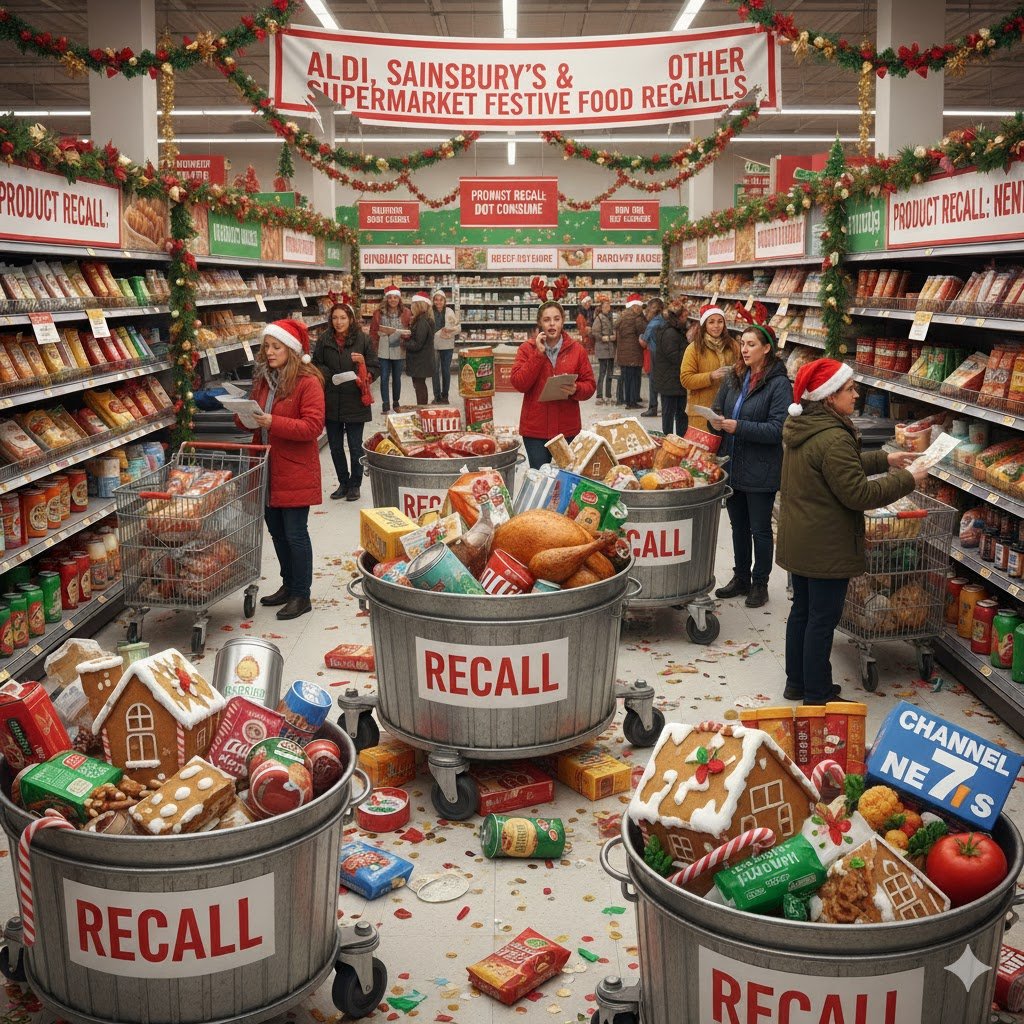
Aldi and Sainsbury’s are among other UK supermarkets that frequently issue festive food recalls. Aldi has recalled products such as ready-to-eat sandwiches and wraps due to E. coli contamination, while Sainsbury’s has warned about milk in products not labelled for allergens. Other supermarkets, including Morrisons, Lidl, and Waitrose, also issue recalls during busy periods when safety issues are identified.
These supermarket festive food recalls highlight that no retailer is immune to risks. Shoppers should regularly check supermarket websites and the Food Standards Agency portal to stay updated. By following recall notices and being aware of the products affected, consumers can make informed choices, avoid health risks, and enjoy a safer festive season. Timely awareness ensures that families can trust the food they bring to the table.
How Consumers Can Stay Safe During Supermarket Festive Food Recalls
To protect themselves during supermarket festive food recalls, consumers should make use of multiple information sources. Checking official supermarket websites and the Food Standards Agency portal is the most reliable way to confirm if a product has been recalled. Many supermarkets also provide updates via social media, in-store notices, and email alerts to ensure customers are informed as quickly as possible.
Families with young children, elderly members, or individuals with allergies should take extra care. Shoppers are encouraged to carefully read labels, avoid consuming any recalled items, and follow the disposal or return instructions provided by the retailer. Understanding supermarket festive food recalls and taking proactive measures significantly reduces the risk of illness while ensuring that festive celebrations remain safe, stress-free, and enjoyable for everyone.
The Impact of Supermarket Festive Food Recalls on the UK Retail Industry
Supermarket festive food recalls not only protect consumers but also have a significant impact on the retail industry. Recalls can result in lost revenue, reputational challenges, and supply chain disruptions, especially during peak holiday periods. Retailers must act swiftly to identify affected products, notify the public, and manage returns while maintaining customer trust.
Investing in stringent quality checks and supplier audits is one way supermarkets reduce the likelihood of recalls. By maintaining high standards, retailers demonstrate accountability and reassure shoppers that their festive food purchases are safe. Supermarket festive food recalls, while disruptive, ultimately encourage improvements in food safety standards and highlight the importance of vigilance in both production and retail.
Conclusion
Supermarket festive food recalls are essential for safeguarding public health during the busy holiday season. Tesco, Aldi, Sainsbury’s, and other major UK supermarkets have issued numerous recalls to prevent contamination risks and protect consumers. Staying informed through official websites, in-store notices, and the Food Standards Agency allows shoppers to avoid unsafe products and enjoy festive meals safely.
Being proactive about supermarket festive food recalls helps families celebrate confidently and responsibly. These recalls highlight the importance of vigilance, proper labelling, and timely communication between retailers and consumers. By following safety notices and returning affected products, shoppers contribute to a safer festive environment, ensuring that holiday traditions remain joyful and worry-free.
Frequently Asked Questions
What are supermarket festive food recalls?
Supermarket festive food recalls occur when seasonal products sold in stores are found to be unsafe for consumption. Reasons can include contamination, undeclared allergens, or foreign objects like glass or metal. These recalls are issued by supermarkets in coordination with the Food Standards Agency to protect public health.
How can I find out if a product is part of a supermarket festive food recall?
Consumers can check for supermarket festive food recalls on the official websites of supermarkets such as Tesco, Aldi, and Sainsbury’s. The Food Standards Agency also maintains an updated list of recalled products. In-store notices and social media alerts are additional ways to stay informed.
Which supermarkets have issued the most festive food recalls in the UK?
Major UK supermarkets like Tesco, Aldi, Sainsbury’s, Lidl, and Morrisons have all issued supermarket festive food recalls in recent years. Tesco often appears in news reports due to its wide range of festive products, while Aldi and Sainsbury’s also issue recalls for ready-to-eat meals, cheeses, and seasonal snacks.
What should I do if I have purchased a recalled festive food item?
If you have a product affected by a supermarket festive food recall, do not consume it. Return it to the store for a refund or follow the disposal instructions provided by the retailer. Staying updated on recalls ensures the safety of your household and prevents potential illness.
Can supermarket festive food recalls cause serious health issues?
Yes, some recalled products can pose serious health risks, including food poisoning from bacteria like E. coli or Salmonella. Undeclared allergens may also trigger severe allergic reactions. Paying attention to supermarket festive food recalls is crucial, especially for families with children, elderly members, or individuals with allergies.
You May Also Read