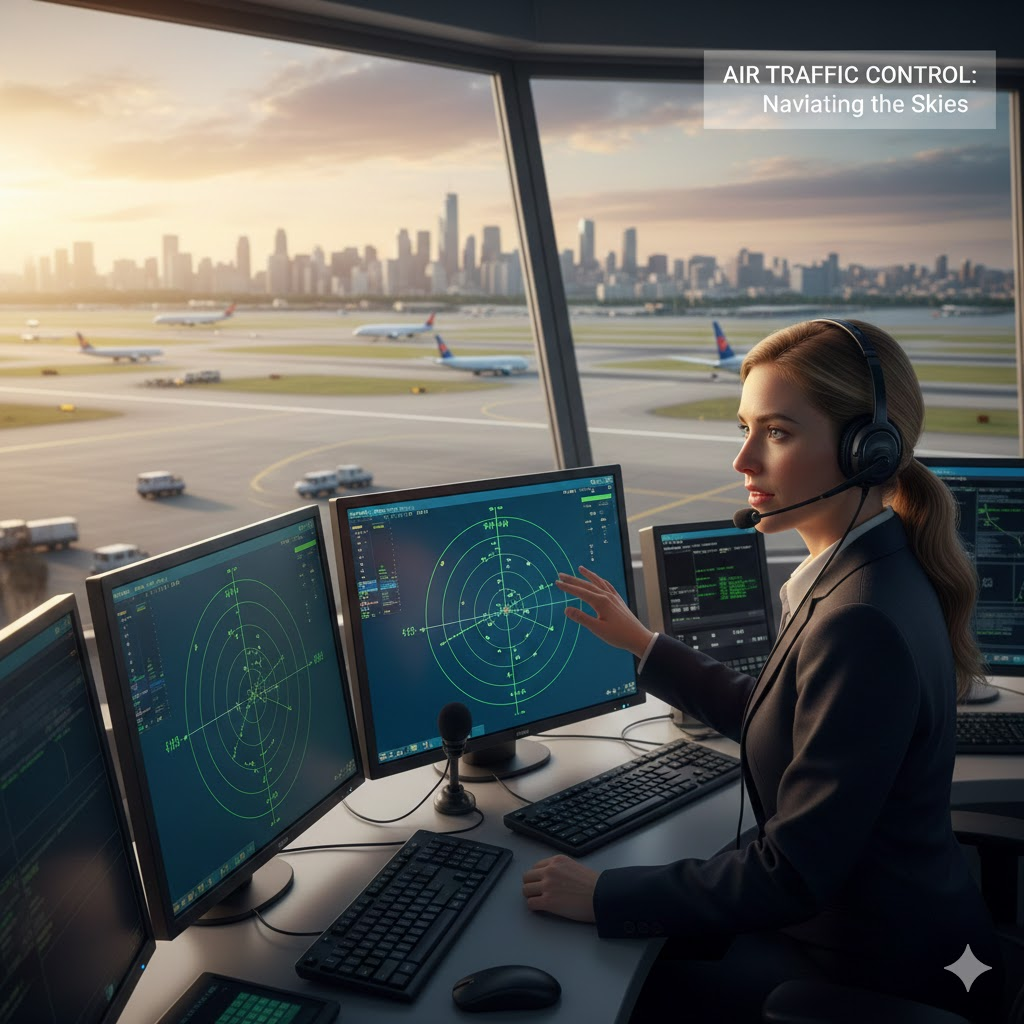
Air Traffic Controller Overview
An air traffic controller plays a critical role in managing the safe and efficient movement of aircraft. From the moment a plane taxis on the runway to when it lands at its destination, an air traffic controller ensures that all flights maintain safe distances, follow clear instructions, and avoid potential hazards. This profession is highly demanding, requiring exceptional focus, quick decision-making, and a thorough understanding of aviation operations.
In the UK, air traffic controllers work in busy airports such as Heathrow, Gatwick, and Manchester, as well as in area control centres. They use advanced radar systems and communication tools to monitor multiple flights simultaneously, providing pilots with real-time guidance. The work environment is high-pressure, but the role is rewarding due to its direct impact on aviation safety and the smooth flow of air traffic across the country.
What Does an Air Traffic Controller Do?
The primary responsibility of an air traffic controller is to maintain the safety of aircraft in controlled airspace. They monitor flight paths, manage takeoffs and landings, and coordinate between different sectors of airspace. Controllers also handle emergencies, provide weather updates, and ensure that pilots have all the information necessary to operate safely. Their work prevents collisions and keeps air travel efficient and reliable.
Air traffic controllers specialise in different areas depending on their workplace. Tower controllers manage local airport traffic, while approach controllers guide aircraft arriving or departing within a specific radius. En route controllers oversee flights travelling between sectors, often from area control centres. These roles require constant vigilance and coordination with both pilots and fellow controllers to maintain an organised and safe airspace.
How to Become an Air Traffic Controller in the UK
Becoming an air traffic controller in the UK involves a combination of education, training, and aptitude. Candidates typically need strong qualifications in subjects like maths and physics, often at A-level or equivalent. Entry can be through apprenticeships, civilian training programmes such as those offered by NATS, or military pathways like joining the Royal Air Force. Each route prepares individuals to handle the unique demands of the job.
Key skills for an air traffic controller include attention to detail, problem-solving, and the ability to work under stress. Training often involves simulations and practical exercises to prepare for real-life scenarios. Successful candidates must also pass rigorous assessments, including medical checks and aptitude tests. This ensures that only those capable of managing high-pressure situations become licensed controllers.
Air Traffic Controller Salary and Career Progression
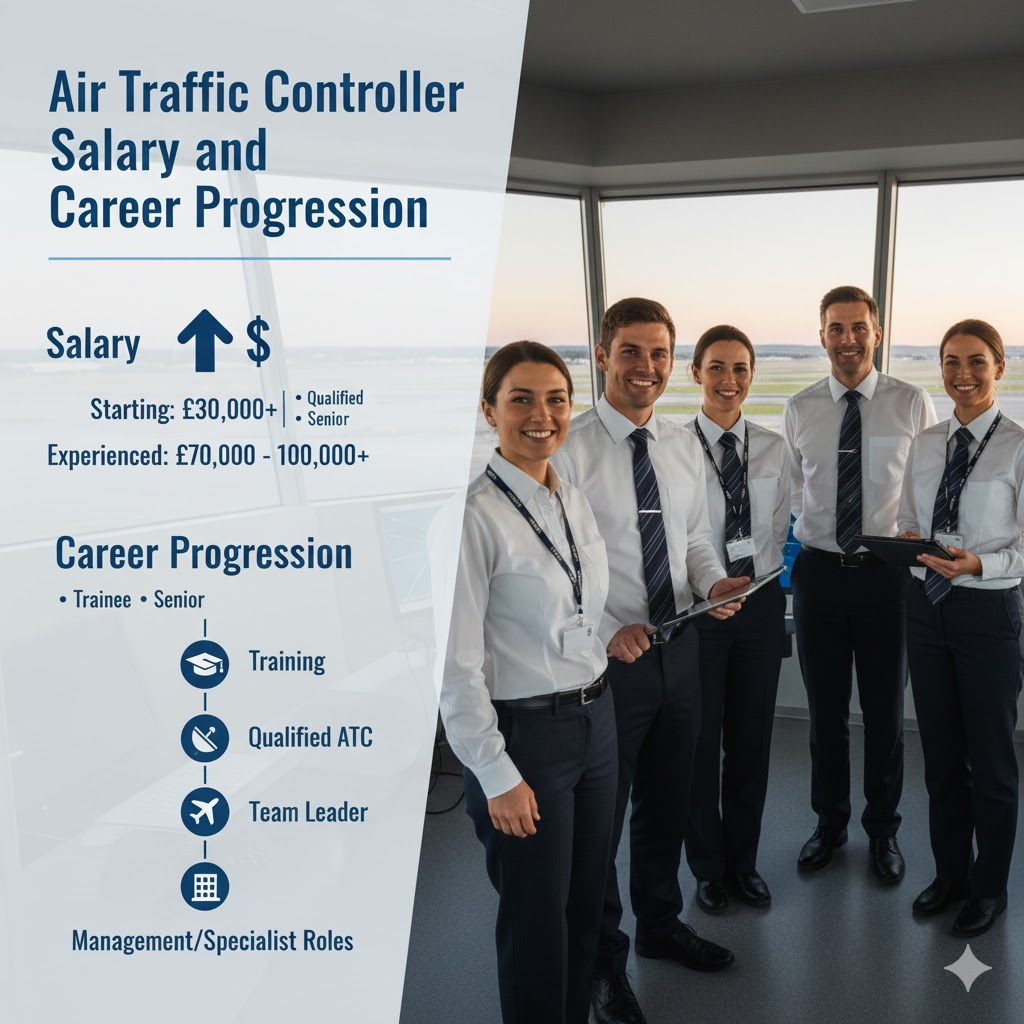
The salary of an air traffic controller in the UK reflects the responsibilities of the role. Starting salaries for trainees can be attractive, and experienced controllers earn significantly more. Wages vary by airport and sector, with busy international hubs like Heathrow offering higher compensation. Many controllers also benefit from pensions, shift allowances, and other employment perks.
Career progression is possible for those who gain experience and demonstrate strong leadership. A controller can move from trainee to licensed professional, then into supervisory or managerial positions. With additional responsibilities, such as overseeing teams or managing airspace sectors, experienced air traffic controllers can achieve high-level roles within organisations like NATS or the Royal Air Force.
Challenges Faced by Air Traffic Controllers
Working as an air traffic controller is demanding and stressful. Shift work is common, with controllers required to cover nights, weekends, and public holidays. The job requires constant attention, as even minor errors can have serious consequences. Controllers must remain calm under pressure while making split-second decisions that affect thousands of passengers daily.
Air traffic controllers in the UK also face external challenges, including flight disruptions caused by strikes and operational issues. European strikes, such as French and Greek air traffic control strikes, can affect UK flights, creating additional workload and requiring rapid problem-solving. Despite these challenges, many professionals find the role rewarding due to its crucial contribution to aviation safety.
Air Traffic Control Technology and Simulation
Technology is central to the work of an air traffic controller. Modern radar, radio systems, and flight tracking software allow controllers to monitor aircraft in real time. Simulators are also widely used for training, enabling trainees to practice handling complex air traffic scenarios, including emergencies. These tools ensure controllers are prepared to manage flights safely and efficiently.
Live operations rely on accurate technology and constant communication. From monitoring aircraft at Heathrow to coordinating long-haul flights across UK airspace, controllers use these systems to maintain order and safety. The integration of simulation and real-time monitoring enhances the skill set of every air traffic controller, ensuring they are fully equipped for the challenges of modern aviation.
Global Context and Air Traffic Control Strikes
Air traffic controllers work in a global context, coordinating with international airports and airlines. Strikes and disruptions abroad, such as in France or Greece, can have ripple effects on UK flights, requiring controllers to manage rerouted or delayed aircraft. Understanding global air traffic trends helps UK controllers maintain safe skies even during international disruptions.
Awareness of global practices, regulations, and technological standards is vital for air traffic controllers. Continuous professional development ensures controllers can adapt to evolving aviation challenges. By staying informed about international air traffic control systems, UK controllers contribute to the smooth functioning of flights worldwide while maintaining the highest safety standards.
Conclusion
An air traffic controller in the UK holds one of the most important and challenging roles in aviation. From managing flights safely to navigating global disruptions, the profession demands focus, technical skill, and resilience. With competitive salaries, career progression opportunities, and the chance to make a real impact, a career as an air traffic controller is both rewarding and prestigious.
You May Also Read