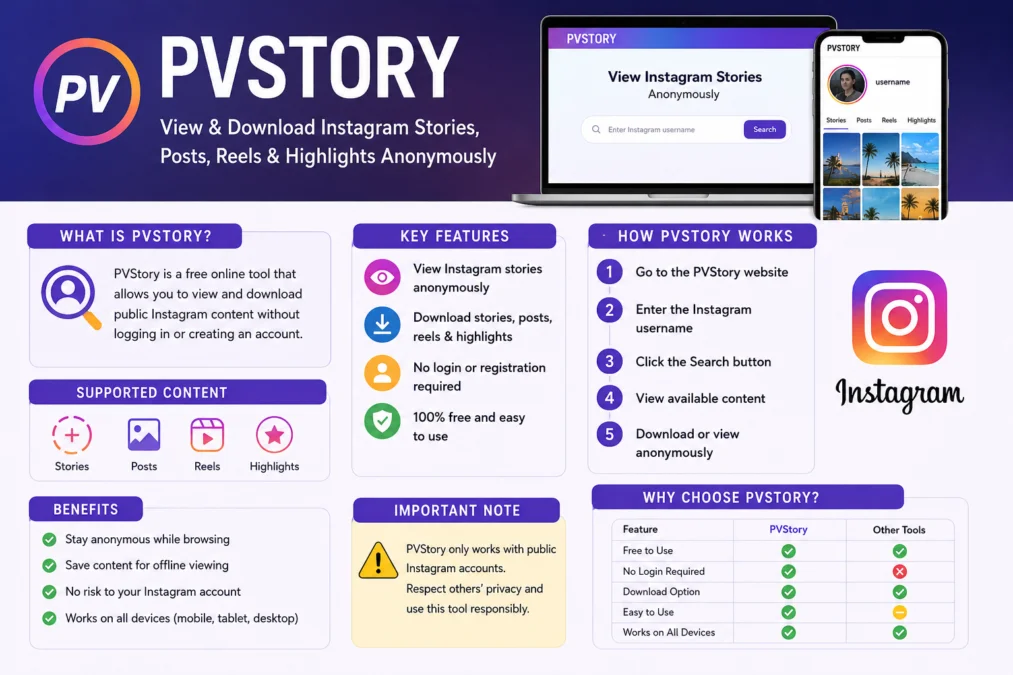
PVStory is an innovative tool designed for users wanting to explore Instagram content without logging in or alerting profile owners. This platform allows anonymous Instagram viewing, making it a popular choice for those interested in privacy-focused social media tools.
What is PVStory and How Does it Work?
PVStory provides a way to view public Instagram profiles, stories, and posts anonymously. Users can browse Instagram without the need to create an account, making it an attractive option for those concerned about their digital footprint management. By simply entering the username of the desired account, visitors can see the user’s stories and posts without being detected.
Why Choose PVStory Over Other Instagram Viewer Tools?
PVStory stands out for its modern, privacy-focused approach to Instagram exploration. Unlike many other story viewer apps that may require account creation or tracking, PVStory allows users to maintain their anonymity. This feature appeals to individuals who want to explore Instagram content while avoiding social media privacy concerns. The tool’s ease of use and the absence of a digital footprint make it a preferred choice for many.
Key Features of PVStory
PVStory offers several features that enhance user experience:
- Anonymous Viewing: Watch Instagram stories without alerting the profile owner that you have viewed their content.
- Chronological Engagement Tracking: Monitor follower interactions and story views in a chronological manner.
- Public Profile Exploration: Access various public profiles easily, which is ideal for social media enthusiasts looking to analyze content consumption patterns.
- No Account Required: Users can explore content without the hassle of registration, which simplifies the process.
PVStory and Instagram Engagement Analytics
With PVStory, users can gain insights into how content performs on Instagram, including engagement metrics related to stories and posts. This functionality is valuable for social media marketers and influencers who want to analyze follower insights and optimize their content strategy. By tracking engagement analytics, users can adjust their approach to better connect with their audience.
How Does PVStory Address Digital Privacy Concerns?
As digital privacy becomes increasingly important, PVStory addresses these concerns by offering a platform that prioritizes user anonymity. By allowing users to view Instagram content without creating an account, it minimizes the risks associated with personal data exposure. This focus on privacy is particularly appealing in today’s environment, where social media tools are often scrutinized for their data handling practices.
Alternatives to PVStory
While PVStory is a robust option for anonymous Instagram viewing, there are other tools available. For instance, InstaPV is another browser-based tool that allows users to view Instagram stories and profiles without logging in. However, users should research these alternatives carefully, as not all offer the same level of privacy or reliability.
Frequently Asked Questions
What is PVStory?
PVStory is an online tool that allows users to view public Instagram stories, posts, and profiles anonymously without creating an account.
How does PVStory work?
Users simply enter the username of the Instagram account they wish to explore, enabling them to view content without being detected.
Is using PVStory safe?
PVStory is considered safe as it does not require users to create an account, thereby reducing the risk of exposing personal information.
Can you track Instagram stories with PVStory?
Yes, PVStory allows users to track and view Instagram stories anonymously, providing insights without notifying the content owner.
What are the benefits of using PVStory?
Benefits include anonymous viewing of Instagram content, ease of use, and the ability to explore public profiles without a digital footprint.
Are there alternatives to PVStory?
Yes, tools like InstaPV also offer anonymous viewing of Instagram content, but users should evaluate their privacy and features.
PVStory is an essential tool for anyone interested in exploring Instagram while maintaining their privacy. With its user-friendly interface and focus on anonymity, it caters to a wide range of users, from casual browsers to serious marketers looking to understand audience engagement better.
You May Also Read