Introduction: Who Is Hermine Poitou?
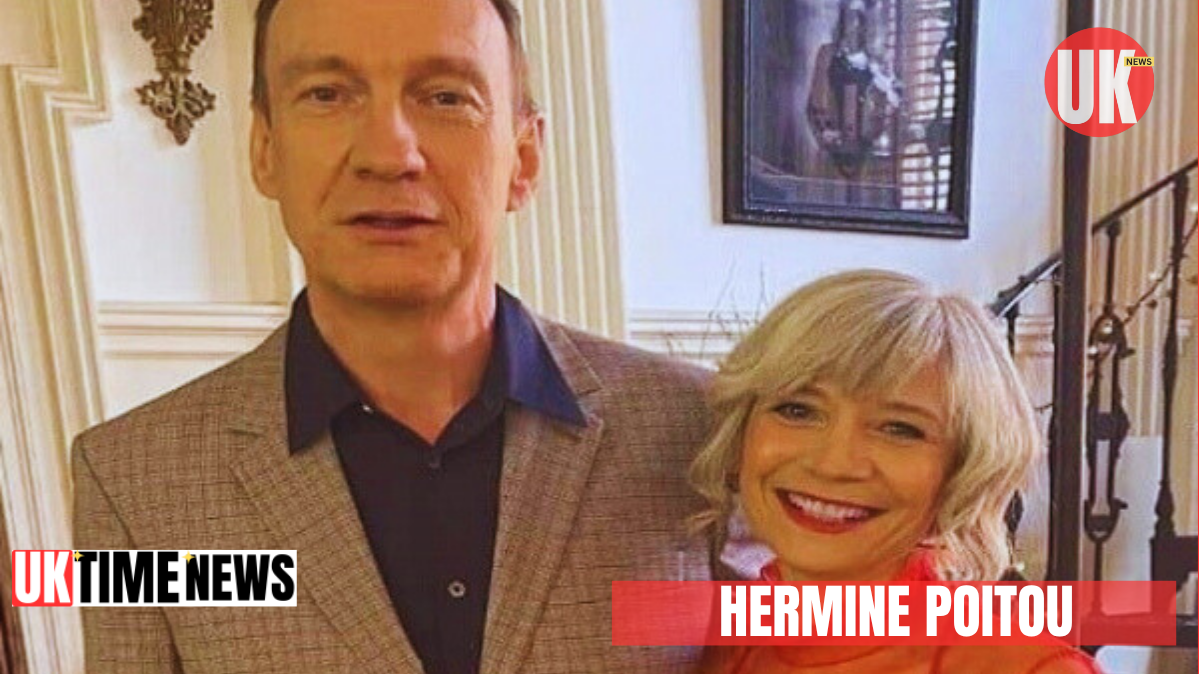
In the noisy world of creative industries—where personal branding often outshines actual craft—Hermine Poitou stands as a quiet but remarkable exception. A French graphic designer and illustrator, she has built her career on subtlety, depth, and discipline rather than celebrity or spectacle. Though many first encounter her name through her husband, actor David Thewlis (famous for playing Professor Remus Lupin in Harry Potter), Poitou herself has a story worth telling: a story about the intersection of art, culture, and individuality.
Hermine Poitou’s life embodies the kind of quiet confidence that defines many great designers. She’s not one to flood social media with updates or to turn her career into a marketing campaign. Instead, her focus has always been on creating meaningful, thoughtful work. Her trajectory—from studying fine arts in France to establishing herself as a professional designer in the United Kingdom—reveals an artist who values purpose over publicity.
In exploring her journey, we discover not only the evolution of a creative professional but also a philosophy that resists modern pressures. Through her lens, design becomes an act of balance—between minimalism and emotion, privacy and expression, tradition and modernity.
Early Life and Education: Foundations of a Creative Mind
A French Beginning Shaped by Culture
Hermine Poitou’s roots lie deep within the rich artistic soil of France—a country synonymous with elegance, architecture, and visual expression. From an early age, she was surrounded by an environment that celebrated creativity. Though she has never revealed much about her childhood, one can imagine the influences that shaped her—Parisian galleries, bookshops lined with design monographs, and a culture that treats art not as luxury but as necessity.
Growing up in France, where design is woven into daily life, undoubtedly gave her an early sensitivity to composition, typography, and visual storytelling. In a nation that produced artistic icons like Monet, Cézanne, and Matisse, it’s little surprise that Hermine Poitou found herself drawn to the visual arts. Her later education would formalize this passion, grounding her instincts in technical mastery.
Education Across Borders: France and England
Poitou’s academic journey is an impressive fusion of cultural and artistic diversity. She began her higher education at Aix-Marseille University, where she studied Arts Plastiques (Fine Arts) between 1986 and 1989. The French curriculum emphasized conceptual understanding, color theory, and artistic philosophy—skills that would later underpin her distinctive minimalism.
Determined to broaden her horizons, she moved to England to pursue a BTEC in Graphic Design at Newcastle College of Art & Design (1990–1992). This marked her transition from fine arts to applied design—a critical shift that equipped her to translate visual concepts into communicative, real-world projects.
Finally, Hermine Poitou attended the Camberwell College of Arts in London, one of the UK’s most respected art schools. There, she completed her BA (Hons) in Graphic Design & Fine Arts between 1992 and 1996. This multidisciplinary approach reflected her lifelong philosophy: art and design are not separate realms but overlapping languages of expression.
A Unique Blend of Traditions
This combination of French fine-arts education and British design training gave Poitou a dual perspective that is evident in her later work. From France, she absorbed elegance, restraint, and the philosophical approach to aesthetics. From Britain, she learned clarity, conceptual design, and communication principles. The result was a creative voice capable of speaking both visually and strategically—a rare balance in the modern design world.
Her education not only shaped her technical abilities but also instilled values she would carry throughout her career: precision, minimalism, and integrity.
Career Beginnings: Finding a Voice in Freelance Design
Freelance Freedom and Early Challenges
After graduating, Hermine Poitou made a bold choice—to operate as a freelance graphic designer and illustrator rather than joining a commercial agency. For many artists, freelancing can be daunting, with its unpredictable workflow and lack of corporate stability. But for Poitou, the independence it offered outweighed the uncertainty.

She began by taking on a variety of small-scale projects—editorial layouts, branding for local businesses, and art direction for print materials. These formative years honed her ability to interpret clients’ needs while preserving her distinct aesthetic. Each project became a canvas to explore balance, form, and clarity.
Her approach to freelance work reflected a quiet confidence. She wasn’t chasing fame or viral recognition. Instead, she built her portfolio through consistent quality and professionalism—earning trust through results rather than publicity.
Crossing into Film and Creative Industries
One of the most intriguing aspects of Poitou’s early career is her crossover into the film industry. Her name appears in credits for projects such as Russian Dolls (2005) and A Child’s Secret (2006), where she contributed graphic and visual design. This intersection of design and film demonstrates her versatility—adapting her artistic sensibility to narrative contexts.
Design for film requires a unique combination of storytelling, timing, and atmosphere. It is not just about creating visuals but about reinforcing emotion. For Poitou, who already viewed design as a visual language, this environment allowed her to expand her skills in motion and narrative design.
Building a Reputation for Subtlety and Substance
By the early 2000s, Hermine Poitou had developed a professional identity defined by subtlety and depth. Her clients valued her for her calm professionalism and ability to translate complex ideas into clean, elegant visuals. While she never became a mainstream “celebrity designer,” she earned something far more enduring—a reputation for trustworthiness and taste.
In a marketplace driven by trends, she stood apart as someone guided by principles rather than popularity. Her work rarely screamed for attention; instead, it invited quiet appreciation.
Artistic Philosophy: The Beauty of Restraint
Minimalism as an Expression, Not a Trend
Minimalism often gets mistaken for simplicity, but for Hermine Poitou , it’s about intentionality. Her designs are pared down not because she rejects ornamentation, but because she respects the viewer’s eye. Every element that remains on the page serves a purpose; every blank space breathes meaning.
Her minimalist approach likely stems from her fine-arts training. In painting and drawing, restraint is a powerful act—choosing what not to include is as important as what appears. Translated into design, this becomes visual editing: removing the noise so that clarity emerges.
Clients and collaborators describe her work as “clean, modern, but soulful.” That final word—soulful—is essential. Poitou’s minimalism is never sterile; it’s informed by emotion and guided by an understanding of human perception. It’s design that whispers instead of shouts, and yet it lingers longer.
The Harmony of Form and Function
Another pillar of Poitou’s philosophy is harmony. She treats design as a balance between aesthetic form and communicative function. In her world, typography, color, and spacing are not decorative decisions—they are storytelling tools.
For instance, in branding projects, she avoids trendy typefaces or visual gimmicks. Instead, she builds identities that age gracefully, much like well-crafted furniture or architecture. Her design decisions favor longevity over novelty.
This approach reflects maturity in a profession often obsessed with trends. She seems to understand that true beauty lies in proportion, clarity, and human resonance.
The Influence of Cross-Cultural Experience
Poitou’s dual background—French and British—also informs her philosophy. French design culture celebrates elegance and restraint, while British design education emphasizes clarity and communication. The synthesis of these influences gives her work an understated cosmopolitanism. Whether creating editorial layouts, logos, or illustrations, her pieces embody both intellect and intuition.
This balance of cultures mirrors the way she balances life: structured but open-minded, private yet expressive. Her art becomes an extension of her identity.
Professional Growth: A Career of Purpose
Selective Projects and Long-Term Clients
Unlike designers who chase volume, Hermine Poitou chooses her projects carefully. Her freelance portfolio reveals collaborations that align with her principles—educational institutions, art publishers, small creative studios, and socially conscious brands. This curated approach allows her to devote time and attention to each brief.
Her reputation for precision has made her a go-to professional for clients seeking design with emotional intelligence. Rather than producing generic visuals, she crafts identities that tell nuanced stories. This has earned her respect within niche circles of European design.
Adaptation in the Digital Age
The rise of digital tools and social media has transformed the creative industry. Yet, Hermine Poitou career shows adaptability without compromise. She embraces modern tools but refuses to let technology dictate aesthetics. Her work may be digital in production, but its sensibility remains rooted in timeless design principles—balance, proportion, and simplicity.
Interestingly, she has avoided the hyper-visibility many designers seek online. Her online presence is limited, reflecting a conscious choice to let her work circulate organically. This absence of online noise has paradoxically enhanced her mystique, making her designs feel even more personal.
Maintaining Artistic Identity
In an era where designers often become influencers, Hermine Hermine Poitou stays grounded. She resists trends that prioritize personality over process. For her, being an artist means having a dialogue with the work itself, not the algorithm.
Her long-term success demonstrates that integrity can be a career strategy. By staying faithful to her aesthetic language, she has created a signature style recognized by those who value authenticity.
Personal Life: Privacy, Partnership, and Perspective
Marriage to David Thewlis
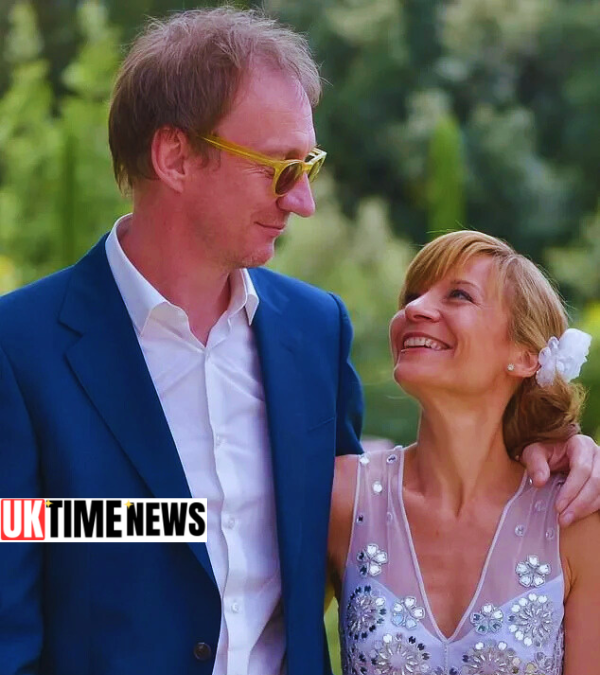
Hermine Poitou married acclaimed British actor David Thewlis on August 5 ( or 6 ) 2016, in an intimate ceremony far removed from paparazzi flashes. Their union brought together two creative worlds—acting and design—each with its own rhythms, pressures, and disciplines.
While Thewlis’s career has placed him in global spotlight, Hermine Poitou remains firmly grounded in her creative sphere. The pair resides in Sunningdale, Berkshire, enjoying a life defined by art, reading, and quiet domesticity. Their relationship illustrates a partnership built on respect and balance, not publicity.
The dynamic between them is instructive: even when married to a celebrity, Poitou retains her independence. She doesn’t appear on red carpets frequently, nor does she use her husband’s fame to promote her career. Instead, she focuses on her design work and values the privacy that enables her to think and create freely.
Step-Parenting and Family Harmony
Through Thewlis’s previous relationship with actress Anna Friel, he has a daughter, Gracie Ellen Mary Friel, born in 2005. Poitou, by all accounts, maintains a positive relationship within this blended family. Although she avoids public commentary, sources close to the family describe a calm, nurturing household where art and curiosity are constant themes.
In creative households, mutual understanding is essential. Both Hermine Poitou and Thewlis respect each other’s need for solitude—a space for imagination to thrive. Their shared appreciation for art, books, and culture forms the foundation of a strong partnership.
Guarding Privacy in a Public World
Perhaps the most defining feature of Hermine Poitou’s personal life is her commitment to privacy. In a digital age where many creatives document every detail of their lives online, she chooses silence as strength. There are no public Instagram accounts, no interviews revealing personal details, and no promotional stunts.
This privacy is not withdrawal—it’s curation. By limiting access to her personal world, she ensures her creative energy remains intact. For artists, this is a powerful act of self-protection. It prevents external noise from diluting internal clarity.
Financial Independence and Professional Integrity
While exact figures are difficult to verify, several outlets estimate Hermine Poitou’s net worth at around $800 000 USD, derived from her work as a designer and illustrator. More important than the number is what it represents—financial independence earned through creative skill, not celebrity association.
This autonomy allows her to choose projects freely and maintain her ethical compass. She doesn’t rely on endorsements or collaborations that compromise her style. Instead, she measures success by alignment—working only on projects that reflect her values.
For many designers, financial independence is a prerequisite for artistic freedom. Hermine Poitou self-sufficiency exemplifies how discipline, longevity, and craft can yield both creative and material stability.
Philosophy Beyond Design: Living with Intention
Choosing Depth Over Noise
Every decision Hermine Poitou makes—from her career trajectory to her communication style—reflects intentionality. In a society that rewards oversharing, her silence feels radical. She shows that the quiet pursuit of mastery can still flourish amid digital clamor.
Her lifestyle mirrors her design philosophy: less clutter, more meaning. She curates her environment, her work, and even her interactions with the same care she gives to typography and form. It’s an integrated philosophy of living deliberately.
The Value of Boundaries in Creative Life
For many artists, boundaries are difficult to maintain. The lines between work, personal identity, and exposure blur easily. Hermine Poitou demonstrates that boundaries are not barriers but frameworks that protect creativity. Her life suggests that privacy isn’t the enemy of relevance—it’s the foundation of focus.
This lesson is increasingly vital in an age when algorithms reward constant visibility. By stepping back, she preserves depth. By declining the spotlight, she amplifies her authenticity.
Inspiration for the Next Generation
Hermine Hermine Poitou story offers guidance for young creatives seeking meaning in their careers. Her example proves that success can take many forms—and that fame is only one, often fleeting, version. True achievement lies in crafting a body of work that feels honest and enduring.
For aspiring designers, her life provides practical lessons: pursue education deeply, honor craft, protect your individuality, and define success on your own terms.
Legacy and Impact: A Blueprint for Quiet Success
Influence in the Design Community
Although she isn’t a household name, Poitou’s influence resonates quietly within design circles. Her career model—selective freelancing, cross-disciplinary skill, and minimalist integrity—has inspired younger designers seeking alternatives to mainstream pathways.
Her story circulates in classrooms and art discussions as an example of how to sustain a creative career without succumbing to burnout or compromise. Teachers cite her as proof that craftsmanship, patience, and modesty can still thrive in today’s market.
The Marriage of Art and Life
In many ways, Hermine Poitou’s life blurs the line between art and living. Her home, described by acquaintances as tastefully minimalist and filled with natural light, mirrors her design ethos. Her friendships, travel habits, and reading interests all reinforce a mindset of quality over quantity.
This holistic integration of art into daily life is part of her legacy. She doesn’t merely “do design”; she lives design—through thought, rhythm, and restraint.
Why Her Story Matters
Hermine Poitou matters not because of celebrity adjacency but because she represents an increasingly rare archetype: the artist of substance in an age of noise. She shows that creativity can coexist with privacy, that mastery outlasts popularity, and that true design is timeless.
Her career is a reminder that one doesn’t need to shout to be heard. Sometimes, the most enduring impact comes from those who work quietly, consistently, and beautifully.
Conclusion: The Enduring Poise of Hermine Poitou
Hermine Poitou’s story is not about fame, glamour, or spectacle. It’s about craft, character, and conviction. From her academic foundations in France to her refined design practice in England, she has built a life defined by creativity and calm. Her commitment to integrity, her refusal to compromise her aesthetic, and her devotion to privacy form a rare constellation in today’s creative world.
She reminds us that design is not merely about visuals—it’s about decisions, discipline, and worldview. In a culture obsessed with attention, Hermine Poitou proves that quiet work can echo loudly over time.
For anyone seeking inspiration—not the loud, fleeting kind, but the lasting, inner sort—her path offers a lesson: live simply, design beautifully, and let your work speak when words are unnecessary.
You May Also Read