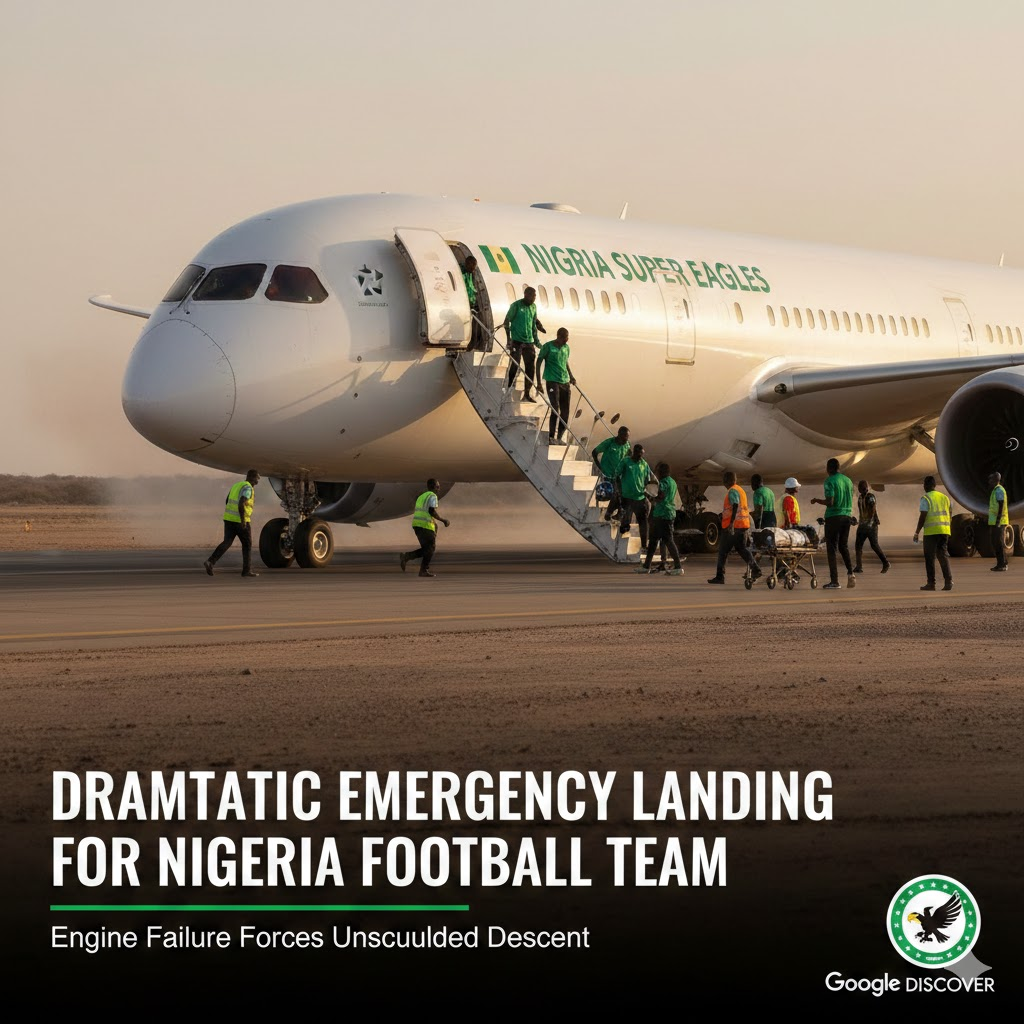
The news of the nigeria football team emergency landing immediately captured the attention of football fans across Nigeria and the world. The Super Eagles, one of Africa’s most celebrated national football teams, faced an unexpected challenge during their journey from South Africa to Uyo. Reports indicate that the aircraft carrying the players and staff experienced a cracked windshield mid-flight, necessitating an emergency landing in Angola. Thankfully, the skilled crew managed the situation flawlessly, and the team landed safely without any injuries.
This incident highlights the risks associated with long-haul travel for professional sports teams. While these journeys are routine, unexpected technical issues can cause considerable alarm. The nigeria football team emergency landing became a trending topic on social media platforms, with fans expressing concern, relief, and admiration for the professionalism of the pilots and flight crew. Such occurrences serve as a reminder of the importance of strict safety protocols during international travel.
Background on the Nigeria Football Team
The Super Eagles have long been a symbol of pride for Nigeria, renowned for their skill, discipline, and achievements in both African and global competitions. The team boasts world-class players such as Victor Osimhen and Wilfred Ndidi, whose performances often draw attention from fans and analysts alike. The nigeria football team emergency landing brought an unusual spotlight on the team, but also reinforced the global interest in their activities, both on and off the pitch.
International travel forms an essential part of the Super Eagles’ schedule, especially during World Cup qualifiers, friendly matches, and continental tournaments. Managing long-distance flights for a team of professional athletes requires meticulous planning, from aircraft selection to in-flight safety measures. The recent incident underscores how unexpected challenges, such as a mechanical issue or a mid-air technical problem, can disrupt even the most carefully planned trips.
Details of the Emergency Landing
The nigeria football team emergency landing occurred when the Super Eagles’ aircraft suffered a cracked windshield while en route from South Africa to Uyo. Mid-air, the pilots detected the fault and immediately activated emergency procedures, diverting the flight to Luanda, Angola. The crew’s quick thinking ensured that all passengers remained calm, and the emergency landing was executed with precision, avoiding any potential injuries or panic among the team.
Passengers, including key players and coaching staff, described the incident as alarming yet well-managed. Aviation experts note that a cracked windshield mid-flight is considered a serious emergency, and the ability of the pilots to land safely demonstrates high levels of training and professionalism. The nigeria football team emergency landing became an example of how safety procedures and emergency preparedness can prevent potential disaster during critical moments.
Reactions from the Team and Officials
Following the emergency landing, the Nigeria Football Federation (NFF) promptly reassured fans that all team members were safe and unharmed. Statements emphasised that no injuries were sustained, and the situation was managed according to aviation safety standards. The nigeria football team emergency landing became a story of relief for supporters, highlighting both the resilience of the players and the efficiency of the response teams involved.
Players shared their personal experiences on social media, reflecting on the tense moments during the flight and expressing gratitude for the pilots’ calm handling of the situation. Officials also emphasised that such incidents, though rare, reinforce the importance of travel preparedness and coordination between the federation, airlines, and emergency authorities. Fans were reassured that the Super Eagles remained focused on their upcoming matches despite the scare.
Safety Measures and Aircraft Protocols
Emergencies like the nigeria football team emergency landing highlight the critical role of safety protocols in aviation, especially for sports teams travelling internationally. Airlines carrying professional athletes often implement enhanced safety measures, including emergency drills, aircraft maintenance checks, and pilot training programs specifically designed for high-profile passengers. These measures ensure that passengers can travel safely even in the event of unforeseen technical faults.
In this case, the quick response of the flight crew, adherence to international aviation guidelines, and effective communication with emergency teams ensured that the Super Eagles arrived safely in Angola. The incident serves as a reminder to sports organisations and airlines alike about the importance of strict safety measures, thorough pre-flight inspections, and continuous monitoring to prevent accidents or injuries during flights.
Impact on Upcoming Matches and Team Schedule
The nigeria football team emergency landing caused only a temporary disruption to the Super Eagles’ schedule. Players were able to rest and recover upon arrival in Angola before resuming their journey to Uyo. Football officials confirmed that the incident would not affect the team’s participation in upcoming World Cup qualifiers, demonstrating efficient crisis management by the Nigeria Football Federation.
However, the event sparked discussions about contingency planning for travel disruptions. Ensuring that players’ fitness and mental preparation remain intact after unexpected incidents is essential for professional teams. The nigeria football team emergency landing underscored the need for organisations to have robust travel plans, including alternate routes, backup aircraft, and coordination with emergency authorities in foreign countries.
Fans’ Reactions and Social Media Buzz
News of the nigeria football team emergency landing quickly went viral, with fans sharing messages of concern and relief across Twitter, Instagram, TikTok, and Facebook. Supporters praised the pilots’ professionalism and the calmness of the team during the emergency. Memes and reaction videos circulated widely, demonstrating the strong connection between the Super Eagles and their fanbase.
Social media attention also amplified the reach of official updates, ensuring accurate information was disseminated quickly. The nigeria football team emergency landing became a trending topic, showing how digital platforms can shape public perception and provide real-time updates during high-profile incidents. Fans celebrated the safe arrival while sharing messages of support and encouragement for the team’s upcoming fixtures.
Lessons Learned and Future Precautions
The nigeria football team emergency landing provides important lessons for future sports travel. Teams, airlines, and football federations must prioritise safety by implementing strict pre-flight checks, emergency protocols, and crew training. Such precautions ensure that incidents can be managed effectively without endangering passengers or disrupting schedules.
In addition, the incident emphasises the importance of clear communication between teams, airlines, and regulatory authorities. By learning from this event, sports organisations can develop strategies to mitigate risks, improve emergency preparedness, and provide reassurance to fans, ensuring that teams focus on performance rather than travel concerns.
Conclusion
The nigeria football team emergency landing was a dramatic yet ultimately reassuring event for the Super Eagles and their supporters. The skilled response of the flight crew, combined with effective emergency protocols, ensured the team’s safety and prevented injuries. Fans across Nigeria and around the world can take comfort in knowing that safety measures were successfully implemented, allowing the Super Eagles to continue their journey and focus on achieving success on the pitch.
You May Also Read